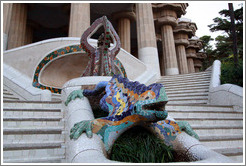
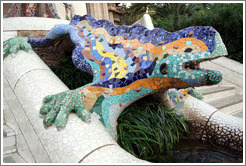
Dragon near main entrance.  Park Güell.

Barcelona, Spain

by Eve Andersson

Home : One Article
Barcelona is the capital city of the Catalonia region of northeast Spain, where both Catalan and Spanish are spoken. Sitting on the Mediterranean, this city is known for its beaches but is even more famous for the many creations of the brilliant, quirky architect Antoni Gaudí.

La Sagrada Familia

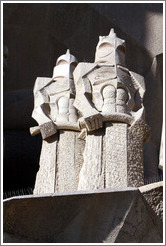
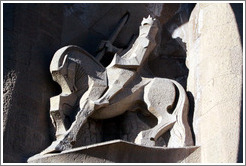
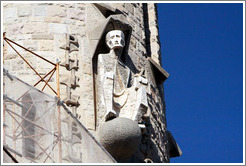
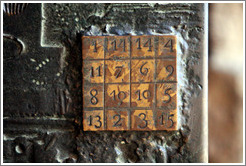
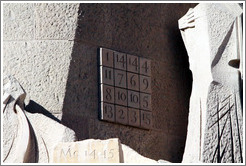
Perhaps Gaudís most well-known work — certainly the most impressive in terms of scale — is La Sagrada Familia, a colossal church that he began designing in 1883 that is still under construction today. Gaudí's designs were often inspired by nature. The bleak, geometric sculptures on the Passion façade of La Sagrada Familia form an interesting contrast; they were created by modern-day Catalan sculptor Josep Maria Subirachs. Magic squares with magic constant 33 appear in a few places on the Passion façade, presumably referring to the age of Jesus at the time of the Passion.
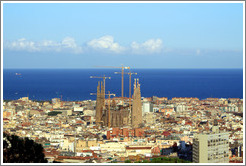
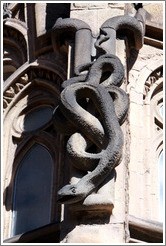
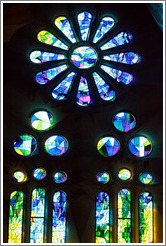
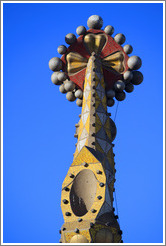
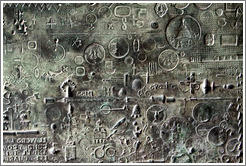
La Sagrada Família, viewed from Park Güell. Serpent.  La Sagrada Família. Stained glass.  La Sagrada Família. Detail from a spire.  La Sagrada Família. Detail from a door in the Passion façade.  La Sagrada Família.

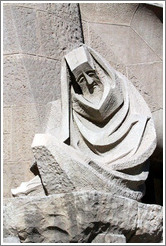
Figure by sculptor Josep Maria Subirachs.  Passion façade, La Sagrada Família. Roman soldiers by sculptor Josep Maria Subirachs.  Passion façade, La Sagrada Família. Sculpture by Josep Maria Subirachs depicting Longinus, a Roman soldier who converted to Christianity after thrusting his spear into Jesus. Passion façade, La Sagrada Família. Philipus by sculptor Josep Maria Subirachs. Passion façade, La Sagrada Família.

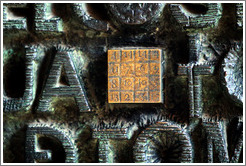
Magic square on a door in the Passion façade.  La Sagrada Família. Magic square on a door in the Passion façade.  La Sagrada Família. Magic square on the Passion façade, La Sagrada Família.

Park Güell

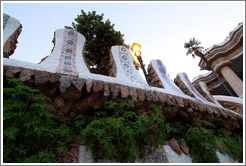
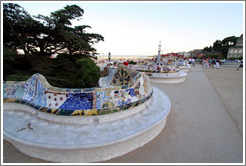
Elements of this large park, situated on a hill overlooking central Barcelona, were designed by Antoni Gaudí, including an extraordinarily long, serpentine bench on the central terrace and his popular mosaic dragon fountain.
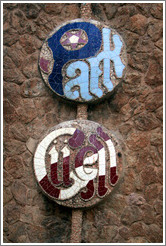
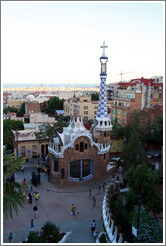
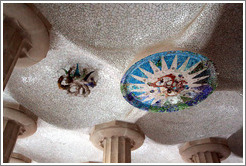
Park Güell sign. Building that resembles a gingerbread house near main entrance.  Park Güell. Ceiling under the central terrace.  Park Güell. Detail near main entrance.  Park Güell. Serpent bench on the central terrace.  Park Güell. Dragon near main entrance.  Park Güell.

Casa Batlló

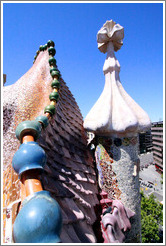
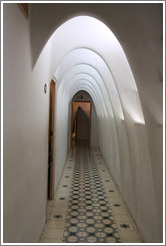
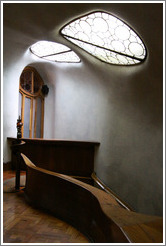
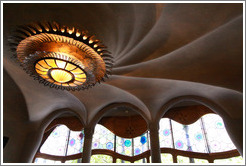
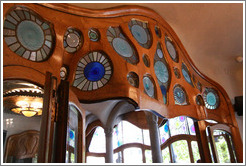
The chimneys might be the most recognizable part of this house restored by Gaudí and Josep Maria Jujol, but the entirety of the house is a wonder to behold, with few straight vertical lines and the most detailed consideration put into everything, even the door handles.
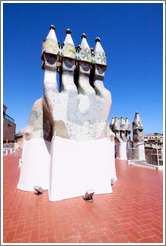
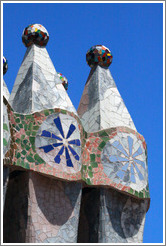
Chimneys.  Casa Batlló. Chimneys (detail).  Casa Batlló. Lizard-like roof detail.  Casa Batlló. Hallway.  Casa Batlló. Windows above staircase.  Casa Batlló. Light and ceiling.  Casa Batlló. Door frame with stained glass insets.  Casa Batlló.

Beaches

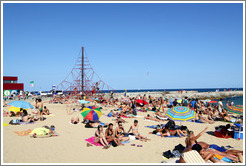
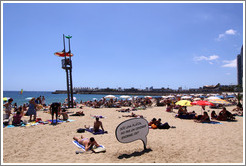
Barcelona's four kilometers of beaches (two of the beaches, Bogatell and Nova Icária, are pictured below) might not be naturally occurring (the sand was brought in), but they are quite nice and easy to get to via public transport.
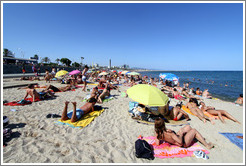
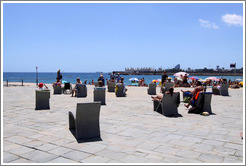
Bogatell beach. Stone beach chairs between Bogatell beach and Nova Icària beach. Nova Icària beach. Sign that  says "Sóc una platja, no pas un cendrer enorme, ok?" ("I'm a beach, not a huge ashtray, ok?").  Nova Icària beach.

Other Barcelona Photos

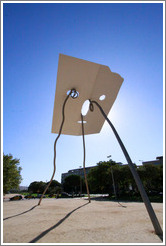
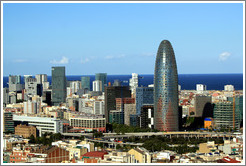
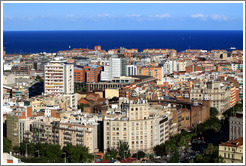
David i Goliat, a sculpture by Antoni Llena (1992) in Parc de les Cascades. Barcelona, including the bullet-shaped Agbar tower, viewed from the Sagrada Familia. Barcelona, viewed from La Sagrada Família.


More photos: View all photos in the directory /photos/spain/.
Eve Andersson (eve@eveandersson.com)
Add a comment